

Save CA$49.96
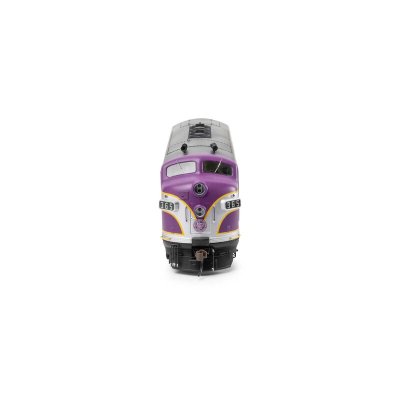
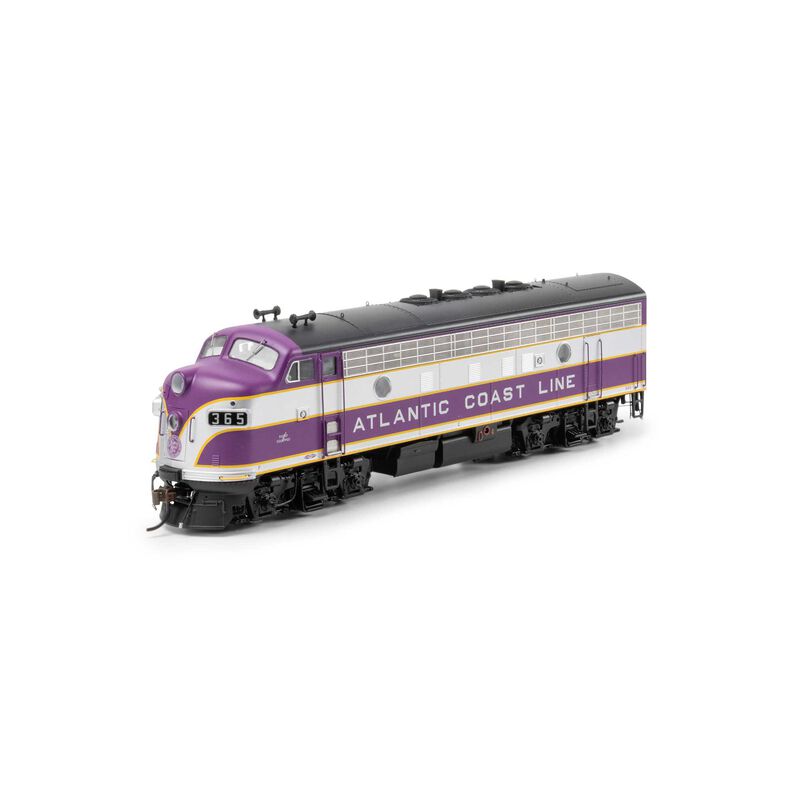
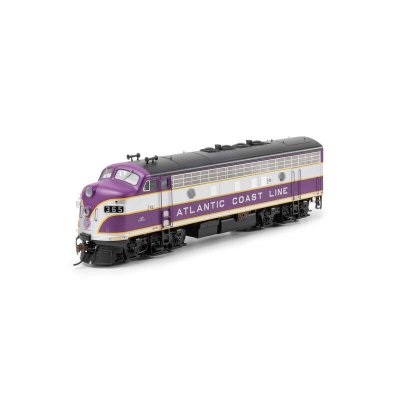
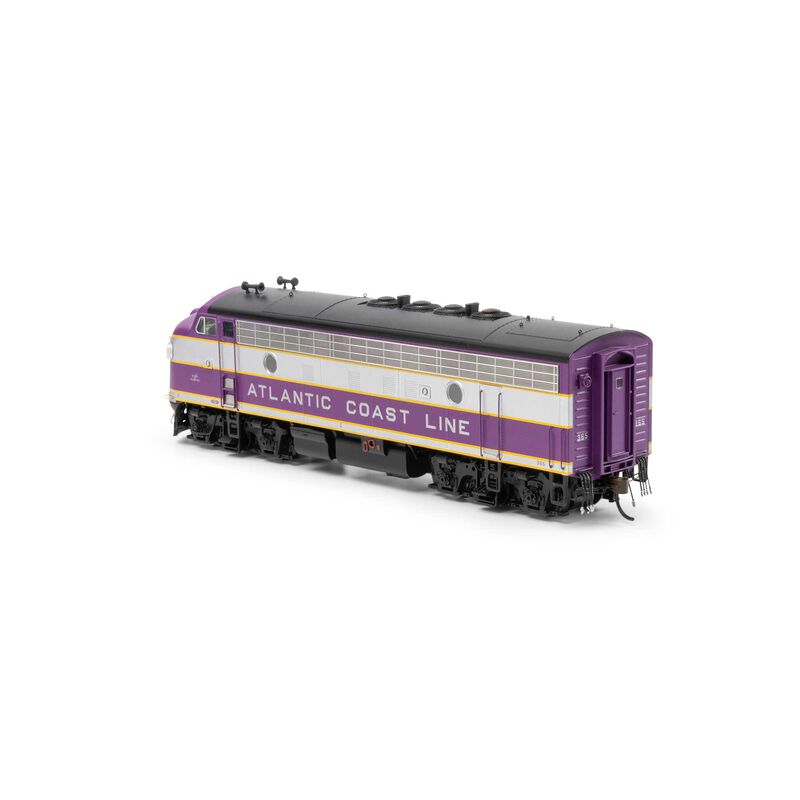
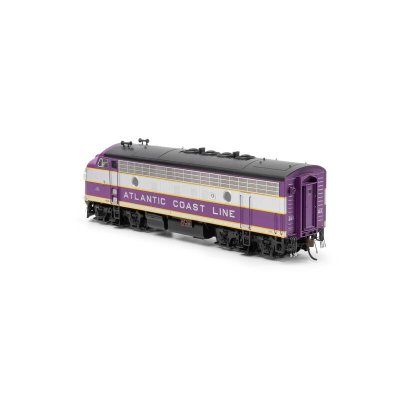
Athearn Genesis 19585 - HO F7A Locomotive, DCC Ready, ACL #365
SKU: 140-G19585

- Shipping infoWe deliver worldwide
- Payment methods

- Return PolicyWe accept returns
Athearn Genesis 19585 - HO F7A Locomotive, ACL #365
Part of ACL’s initial F7 order, units 348-371 came decked out in the road’s eye-catching purple and silver scheme. Delivered with small lettering, this was later revised to larger Atlantic Coast Line font, as depicted on our models.
PROTOTYPE AND BACKGROUND INFO:
EMD F-units were a line of diesel-electric locomotives produced between November 1939 and November 1960 by General Motors Electro-Motive Division and General Motors-Diesel Division. Final assembly for all F-units was at the GM-EMD plant at La Grange, Illinois and the GMDD plant in London, Ontario, Canada. They were sold to railroads throughout the United States, Canada, and Mexico.
Structurally, the locomotive was a carbody unit, with the body as the main load-bearing structure, designed like a bridge truss and covered with cosmetic panels. The so-called bulldog nose was a distinguishing feature of the locomotive’s appearance, and made a lasting impression in the mind of the traveling public.
The F-units were the most successful “first generation” road (main line) diesel locomotives in North America, and were largely responsible for superseding steam locomotives in road freight service. Before this, diesel units were mostly only built as switcher locomotives, and only used in rail yards.
F-units were sometimes known as “covered wagons”, due to the similarity in appearance of the roof of an F-unit to the canvas roof of a Conestoga wagon, an animal-drawn wagon used in the westward expansion of the United States during the late 18th and 19th centuries. When a train’s locomotive consist included only F-units, the train would then be called a wagon train. These two usages are still popular with the railfan community.
F-UNIT SERIES LOCOMOTIVE FEATURES:
Lit signal lights and/or beacons, if equipped
Directional constant lighting
Separately-applied photo-etched metal and injection molded detail parts
Speed recorder unless noted
Etched metal fan grilles
Body-mounted McHenry® scale knuckle couplers - Kadee® compatible
Scaled from prototype resources including drawings, field measurements, photographs, and more
Genesis driveline with 5-pole skew wound motor, precision machined flywheels, and multi-link drivetrain
All-wheel electrical pickup provides reliable current flow
LED Lighting for realistic appearance
Packaging securely holds for the model for safe storage
Coupler cut levers
Trainline and MU hoses
Sanding lines
Bell placement & type per prototype
Headlight brightness remains constant
Detailed fuel tank with fuel fillers, fuel gauges, breather pipes & retention tanks
See-through cab windows and full cab interior
DCC-ready features Quick Plug™ plug-and-play technology with 21-pin NEM connector
Accurately painted and printed paint schemes
All-wheel drive with precision gears for smooth & quiet operation
Wheels with RP25 contours operate on all popular brands of track
Heavy die-cast frame for greater traction and more pulling power
Minimum radius: 18” — Recommended radius: 22”
Windshield wipers
Wire grab irons
Lift rings
Product Specs
Axles
4
DCC
Ready/21-Pin NEM
Era
1941-1970
Lighting
LED
Prototype Manufacturer
EMD
Reporting Mark
ACL
Scale
HO
Sound
Ready
Sub Brand
GENESIS
ACL FEATURES:
F7 Phase I
Freight pilot (A-units)
As-built grab iron configuration
Purple scheme with large lettering - first time in Genesis (A-units)
No dynamic brakes
Back-up lights
#365: Cut Skirts
To replace this text with your store's actual shipping info, go to "Design -> Menus & Pages -> Product Page Tabs" and edit the Shipping info page.
We accept the following payment methods:
To replace this text with your store's actual info on payment methods, go to "Design -> Menus & Pages -> Product Page Tabs" and edit the Payment methods page.
This page is intended for your policy regarding returns and refunds.
Here you can provide information as to what products can be returned, how many days your customers have to return their purchase, whether they will receive a refund in the original form of payment, a replacement or a store credit, who pays for the shipping of the previously purchased products to the store, and so on.
To replace this text with your store's actual return policy, go to "Design -> Menus & Pages -> Product Page Tabs" and edit the Return Policy page.
Here you can provide information as to what products can be returned, how many days your customers have to return their purchase, whether they will receive a refund in the original form of payment, a replacement or a store credit, who pays for the shipping of the previously purchased products to the store, and so on.
To replace this text with your store's actual return policy, go to "Design -> Menus & Pages -> Product Page Tabs" and edit the Return Policy page.
Customers who viewed this product also bought
Rapido 102013 - HO Scale Easy Peasy Shorty Passenger Car Lighting Set -- Fits Most HO Scale 72' Cars
SKU: 606-102013 Only 6 left in stock.- 16% less